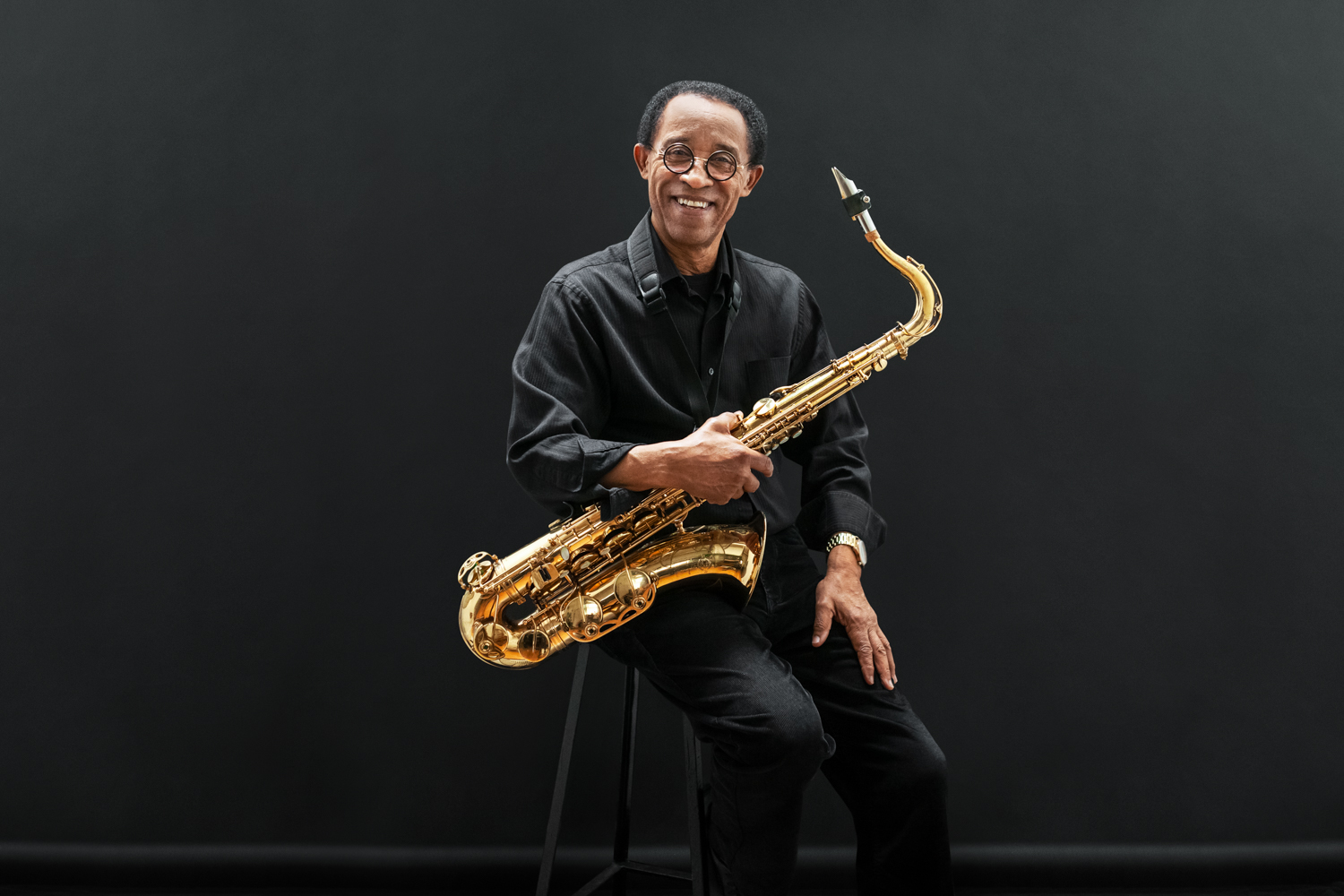
One of Ethiopia's most esteemed saxophonists, and a mainstay of the golden age of Ethio-Jazz, Girma Woldemichael's life story is one of musical triumph over adversity. Born in Ethiopia into circumstances of extreme poverty, with his parents unable to afford to raise him, he was handed over to an orphanage/school in Addis Ababa. It was there that at age 13 he was given his first pair of shoes, and shortly thereafter handed his first musical instrument, a clarinet, told to learn it, and aim to make a living by playing music. Within a year, Girma was playing in the municipal marching band of Addis Ababa.
Shortly afterwards, having learned how to play the saxophone and flute, he found work playing with Wabe Shebelle Band in the clubs of the city that were then filled with lovers of the new genre of Ethio-Jazz, a unique blend of the unusual pentatonic scale of Ethiopian music with jazz, funk, soul and Latin rhythms. Ethio-Jazz was later popularized in the west by Mulatu Astatke, who, along with Girma and others, formed the famed Ethio Stars band. From that point on, Girma was the choice saxophone player called on to perform with all of Ethiopia's biggest orchestras and vocalists, including such stars as Aster Aweke, Mahmoud Ahmed, Alemayehu Eshete and Tilahun Gessesse.
In 1974, a new political regime, the Derg, rose to power in Ethiopia, and Addis Ababa's buzzing musical scene and liberal social life were squashed. Because it was considered a Western import, much of Ethiopia's popular music was censored, and musical creation and practice and the performance of any music unrelated to the revolution was forbidden, resulting in many musicians either leaving their profession or leaving the country.
During this dangerous period, often referred to as the Red Terror (Qey Shibir), the repressive military junta carried out a political repression campaign to eliminate political opponents, with tens of thousands imprisoned and executed without trial. In conflict with the government, Girma never knew if or when he might be next. For 15 years he tried, without success, to get a visa to leave, until 1991 when he was finally allowed to go to the United States with the Ethio Stars band. There, he and four of his bandmates defected and Girma was able to come to Toronto and restart his life.
In Canada, the traditional immigrant's story of having to make ends meet by any means possible meant that he had to support his family by driving a cab, but he never lost his love of and commitment to playing music. Continuing to play in various Ethiopian clubs, including with the Millennium Band, and at concerts throughout Toronto, the rest of Canada and the United States whenever he could, he also joined other Ethiopian stars such as Aster Aweke and Mahmoud Ahmed on tours around the world including to Africa, the Middle East, Europe, Australia and New Zealand.
Now, with his family grown and the responsibility of supporting them no longer a burden, Girma is able to devote his life full-time to music.